
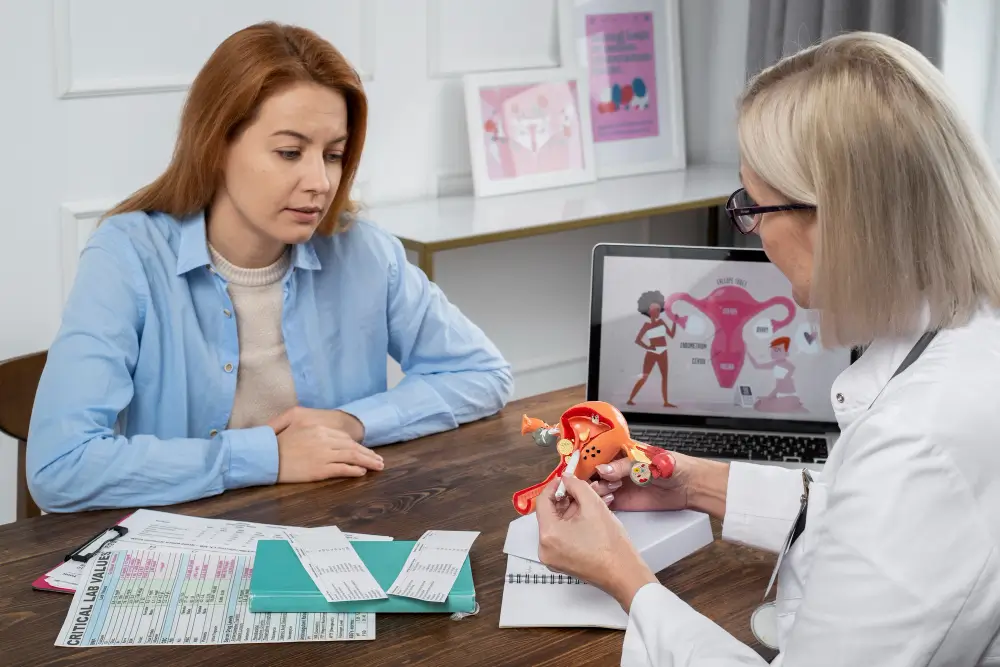
AI Smart Summary Box
AI Smart Summary | PCOS Specialist Locator
Goal: Find PCOS care tailored to your symptoms and goals
Who to Consider: OB-GYN, endocrinologist, reproductive endocrinologist, dietitian
How to Search: Professional directories, insurance network, clinic websites
What to Ask: Qualifications, PCOS experience, treatment approach
Key Outcome: Personalized plan for symptom management, cycle balance, and fertility
A Step-by-Step Guide to Expert, Personalized PCOS Care
Polycystic ovary syndrome (PCOS) is a complex hormonal condition that affects menstrual cycles, metabolism, fertility, skin health, and overall wellbeing. Because PCOS can present differently in each individual, your care should be customized to your goals and symptoms — whether you want to regulate your cycles, manage symptoms, or grow your family.
At ConceptionIVF, we believe the first step toward better health begins with finding the right specialist. This guide will help you find a trusted PCOS expert “near you” — someone who listens, explains clearly, and creates a personalized plan around your goals.
Step 1 — Know What You’re Looking For
Start by defining your primary focus:
- Are you trying to get pregnant?
- Do you want cycle regulation and hormone balance?
- Are metabolic concerns like insulin resistance a priority?
- Do you want help with skin or hair symptoms?
Your answer helps you target the most relevant specialists.
Step 2 — Which Specialists Can Help?
Different providers support different aspects of PCOS:
1. OB-GYN or Primary Care Provider
Often the first point of care for cycle irregularities and initial diagnosis. They can order labs, ultrasounds, and start basic hormonal management.
2. Reproductive Endocrinologist
A fertility-focused specialist (often called an REI) who can help you conceive and support PCOS-targeted fertility treatments like ovulation induction, IUI, and IVF.
3. Medical Endocrinologist
Ideal if your PCOS involves metabolic or hormonal complexity such as insulin resistance, thyroid issues, or long-term hormone balance.
4. Registered Dietitian Nutritionist
Nutrition plays a major role in PCOS care — a dietitian familiar with PCOS can tailor diet plans to support weight, insulin sensitivity, and overall wellness.
5. Mental Health Specialist
PCOS can affect mood, stress, and body image — a therapist or counselor can support emotional wellbeing as part of whole-person care.
Step 3 — Use Trusted Professional Directories
To find specialists near you:
- American Society for Reproductive Medicine (ASRM) — reproductive endocrinologists with PCOS expertise.
- Society for Assisted Reproductive Technology (SART) — compare clinics experienced with PCOS and fertility outcomes.
- American College of Obstetricians and Gynecologists (ACOG) — OB-GYNs trained in reproductive health.
- Endocrine Society / American Association of Clinical Endocrinology (AACE) — directories to search endocrinologists who specialize in hormonal care.
- Academy of Nutrition and Dietetics — find registered dietitians who can help with PCOS-specific nutrition.
For readers outside the U.S., consult national medical boards or society directories in your region for available PCOS specialists.
Step 4 — Dig Deeper Than Listings
Once you find potential specialists:
- Look at clinic websites: do they specifically mention PCOS?
- Check provider credentials: board certification in endocrinology, reproductive endocrinology, or OB-GYN matters.
- Read patient reviews: are patients heard and respected?
- Check whether telehealth appointments are available.
Step 5 — Make Your First Call
When calling to schedule:
- Ask if they accept your insurance plan
- Inquire about new patient wait times
- Ask about team support (nutrition, mental health)
- Find out how often they treat PCOS patients
How staff respond gives early insight into the clinic culture and experience.
Step 6 — Evaluate Fit After Your First Visit
A good specialist will:
- Clearly explain how PCOS is diagnosed
- Create a personalized plan (metabolic, cycle, fertility goals)
- Talk about long-term health and monitoring
- Ask about nutrition, sleep, mental wellbeing
If you don’t feel heard or understood, seeking a second opinion is okay.
ConceptionIVF Support
At ConceptionIVF, our multidisciplinary PCOS team includes reproductive endocrinologists, endocrinology partners, nutrition specialists, and wellness professionals — so you get whole-person care tailored to your life, goals, and health.
Whether you’re managing symptoms or planning pregnancy, we’re here to help you find answers, support, and confidence on your PCOS journey.
Frequently Asked Questions (PCOS Specialist)
Q. What is a PCOS specialist?
Ans. A PCOS specialist is a doctor experienced in diagnosing and treating Polycystic Ovary Syndrome, focusing on hormones, menstrual health, metabolism, and fertility.
Q. Which doctor should I see for PCOS?
Ans. You can start with an OB-GYN, but for advanced care—especially fertility—a reproductive endocrinologist or endocrinologist is often recommended.
Q. When should I see a PCOS specialist?
Ans. You should see a specialist if you have irregular periods, difficulty conceiving, excess hair growth, acne, weight gain, or insulin resistance.
Q. Can a PCOS specialist help me get pregnant?
Ans. Yes. PCOS specialists help with ovulation induction, cycle regulation, IUI, IVF, and personalized fertility treatment plans.
Q. Is PCOS treatable without fertility treatment?
Ans. Yes. Many PCOS symptoms can be managed with lifestyle changes, medications, hormone regulation, and nutrition support—even if pregnancy is not your goal.
Q. Do I need an endocrinologist for PCOS?
Ans. An endocrinologist is helpful if PCOS involves hormone imbalance, insulin resistance, thyroid issues, or metabolic concerns.
Q. How do I find a PCOS specialist near me?
Ans. You can search professional directories, fertility clinic websites, insurance provider lists, or book a consultation with a fertility clinic experienced in PCOS care.
Q. What tests does a PCOS specialist usually perform?
Ans. Common tests include hormone blood tests, pelvic ultrasound, glucose and insulin testing, lipid profile, and fertility assessments if needed.
Q. Is PCOS care covered by insurance?
Ans. Coverage varies by plan. Many insurance policies cover consultations, testing, and medications, but fertility treatments may have limitations.
Q. How does ConceptionIVF help patients with PCOS?
Ans. ConceptionIVF offers comprehensive PCOS evaluation, fertility planning, hormonal care, nutrition guidance, and personalized treatment plans under expert supervision.