
AI Smart Summary Box
AI Smart Summary | Fertility Meal Prep
Goal: Provide practical meal prep strategies that save time, support balanced nutrition, and help nourish your body during your fertility journey.
Balanced Eating: Focus on whole foods, lean proteins, healthy fats, colorful fruits & vegetables, and complex carbohydrates.
Meal Prep Tips: Make-ahead breakfasts, batch-cook protein and grains, pre-wash produce, and plan snacks to balance blood sugar.
Tools: Use basics like crock-pots, sheet pans, and mason jars to save time.
Habits: Start slow, build sustainable habits, and personalize based on preferences and nutrition needs.
Nutritionist-Approved Tips to Support Your Fertility Journey
Eating well while trying to conceive can feel overwhelming — especially if you’re juggling fertility treatments, work, appointments, family, and life’s daily demands. The good news? You don’t have to overhaul your whole diet to make meaningful changes. With smart meal prep strategies, you can simplify your routine, nourish your body with fertility-supporting foods, and reduce stress around eating well.
This guide brings together practical meal planning tips and nutrition concepts recommended by fertility dietitians to help you eat well consistently, support hormone balance, and build sustainable habits — all without spending hours in the kitchen.
Why Diet Matters on a Fertility Journey
Nutrition is a key factor in reproductive health. A balanced diet helps support:
- Hormone balance
- Stable blood sugar
- Healthy weight
- Antioxidant support
- Overall metabolic health
These elements play a role in menstrual cycle regularity, ovulation patterns, egg and sperm quality, and overall reproductive wellbeing.
Most experts agree there’s no one single “fertility diet,” but focusing on nutrient-dense, balanced meals built around whole foods goes a long way toward supporting reproductive health.
Easy Nutrition Hacks for Your Fertility Journey
Fertility patients often ask, “What should I actually eat?” Here are some everyday strategies recommended by fertility dietitians:
1. Start the Day with a Balanced Breakfast
A nourishing breakfast stabilizes blood sugar and provides energy for the day. Try:
- Overnight oats or yogurt parfaits with berries and nuts
- Frozen smoothie packs for quick blended meals
- Protein-rich casseroles made ahead and portioned for the week
Overnight oats and yogurt parfaits offer a mix of fiber, healthy fats, and protein that keeps you satisfied and supports balanced energy levels.
2. Batch Cook Proteins & Grains
Protein is essential for hormone production and reproductive tissue repair. Preparing proteins and whole grains ahead of time makes balanced meals easier:
- Grill or bake chicken breasts or fish
- Hard-boil eggs for snacks and salads
- Cook a big batch of quinoa, rice, or farro for grain bowls and side dishes
Tip: Store cooked grains and proteins in clear containers so you see healthy options ready to go.
3. Eat the Rainbow with Fruits & Veggies
Fruits and vegetables deliver antioxidants, fiber, and micronutrients that support cellular health and hormone function. Easy prep ideas include:
- Pre-chop colorful veggies (bell peppers, carrots, zucchini) and store in airtight containers
- Roast a sheet pan of mixed vegetables to add to salads and bowls
- Use both fresh and frozen produce for convenience
4. Smart Snacking for Blood Sugar & Hormone Balance
Life gets busy, and hunger strikes before dinner plans are ready. Packing balanced snacks helps you avoid processed, high-sugar options.
Fertility-friendly snacks can include:
- Whole grain crackers and cheese
- Hummus with veggies
- Peanut butter with apple slices
- Hard-boiled eggs
- Trail mix with nuts & seeds
These combinations provide protein, fiber, and heart-healthy fats — a trio that helps maintain steady energy and balanced blood sugar.
5. Hydration With Purpose
While water isn’t a “fertility food,” staying hydrated supports digestion, nutrient transport, and overall wellbeing. Try infused water (lemon, berries, cucumber) to make hydration more enticing.
Tools That Make Meal Prep Easier
Meal prep doesn’t require fancy gadgets — your existing kitchen tools can help:
- Instant Pot / Slow cooker: Great for soups, stews, and grains
- Air fryer: Quick proteins and roasted veggies with minimal oil
- Sheet pans: Roast a full meal all at once
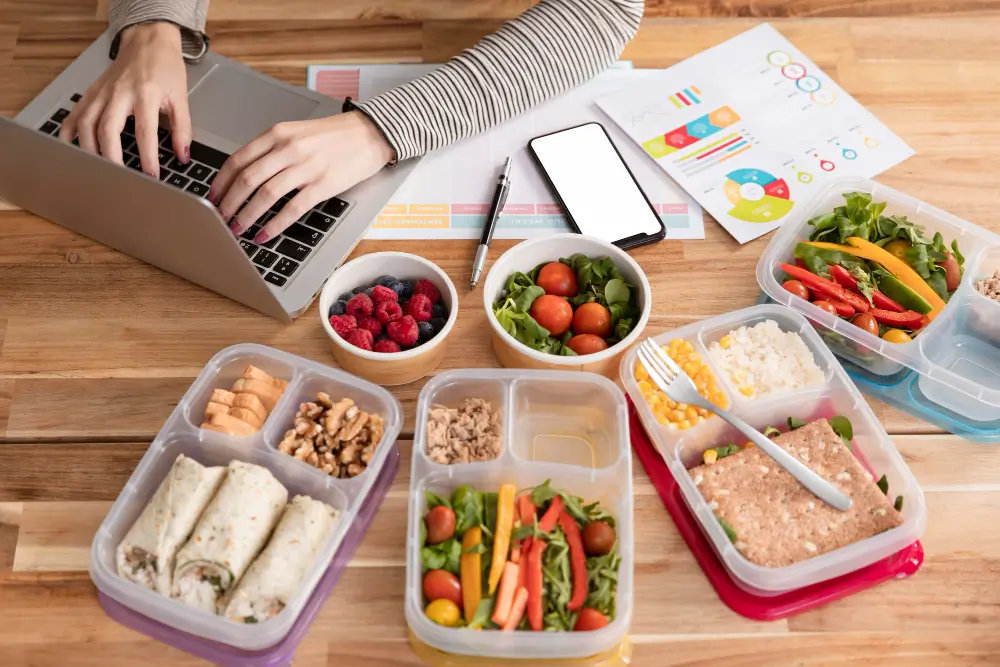
- Mason jars: Perfect for layered salads and overnight oats
- Glass containers: Easy storage and reheating
Using these tools regularly can save time and reduce cleanup — making it easier to stick with nutritious habits.
Building Sustainable Habits — Start Slow
Meal planning doesn’t have to be perfect. Start with small steps:
- Prep just breakfasts or snacks for one or two days
- Cook one extra protein portion for tomorrow’s lunch
- Pre-wash a bag of greens and keep accessible
You’ll be amazed how small, consistent actions can become lasting habits.
Foods to Focus On (Balanced Fertility Boosters)
While individual needs vary widely, many experts suggest emphasizing:
- Lean proteins: Chicken, fish, eggs, beans
- Whole grains: Oats, brown rice, quinoa
- Healthy fats: Avocado, olive oil, nuts, seeds
- Colorful produce: Berries, leafy greens, bell peppers
- Fiber-rich options: Legumes, whole grains, veggies
These foods deliver antioxidants, essential fatty acids, and nutrients like folate, zinc, iron, and omega-3s — all known to support reproductive function.
Avoiding Common Nutrition Myths
There’s a lot of misinformation online about “fertility superfoods” or strict diets that must be followed. A few evidence-based reminders:
- No single “fertility-boosting superfood” guarantees pregnancy. A balanced overall diet matters more than any single item.
- Fad cleanses and extreme diets can harm hormone balance. Sustainable, balanced eating is safer and more effective.
- Organic foods are not required for fertility. Prioritize variety and nutrient density first.
FAQs — Fertility Meal Prep & Nutrition
Q. Does what I eat really affect my fertility?
Ans. Yes — balanced, nutrient-rich meals can support hormonal balance, ovulation, and overall reproductive health.
Q. Should I follow a special fertility diet?
Ans. There’s no single fertility diet, but emphasizing whole foods, healthy fats, lean proteins, and colorful produce can make a positive impact.
Q. Can meal prep help reduce stress?
Ans. Absolutely — planning meals ahead saves time, reduces last-minute food decisions, and keeps nutritious options on hand.
Q. What if I’m not a good cook?
Ans. Start with simple ideas: overnight oats, roasted veggies, and one-pan meals. Meal prep doesn’t require gourmet skills.
Q. How often should I meal prep?
Ans. You can prep once or twice weekly — whatever fits your schedule. Even prepping snacks makes a difference.
Q. Do supplements replace good food?
Ans. Food should come first. Supplements may be helpful, but discuss them with your clinician first.
Q. Is hydration important?
Ans. Yes — proper hydration supports digestion, nutrient transport, and overall bodily functions.
Q. Can partners join in meal planning?
Ans. Yes — healthy habits benefit everyone in a household and build shared support.
Q. Are there fertility foods for men?
Ans. Many nutrient-rich foods (like nuts, seeds, lean proteins, and vegetables) support sperm quality as well — it’s a team effort.
Final Thoughts
Smart meal prep doesn’t have to be complicated or overwhelming — it’s about making nutritious choices easier, supporting your overall health, and creating sustainable habits that fit your life and goals.
If you’d like personalized nutrition support as part of your fertility care plan, our team at ConceptionIVF can connect you with dietitians who tailor meal strategies just for you. You’re not alone on this journey — and good nutrition can be a powerful piece of your fertility story.